
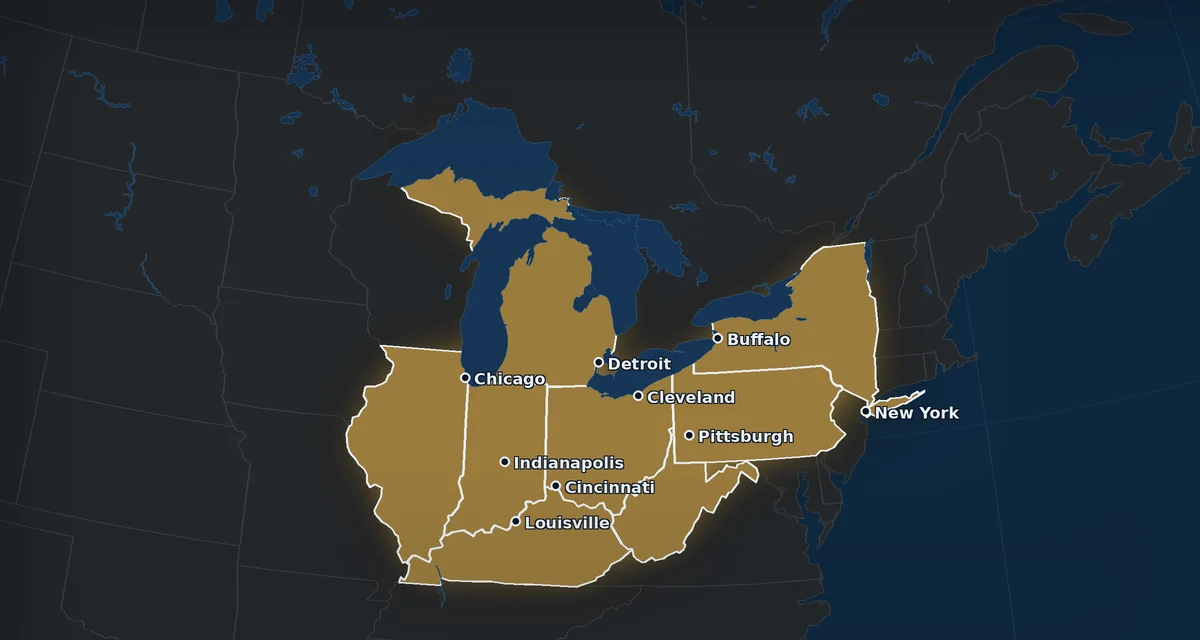
Great Lakes, 2000
The original corridor from Chicago to Buffalo and Pittsburgh. Steel, autos, farms, and freight.
Run a holding company in a working regional economy. Build plants, own your supply chain, float subsidiaries, and take over rivals who remember what you did to them. Offline, on your phone or your computer.
You are an investor, not a single company. You hold cash, own shares, and control firms through voting rights. Carve a division out into a subsidiary, list part of it on the exchange and keep control, spin it off, or go into a joint venture with a rival. A company can fail without ending your career.
Every region has its own workforce, wages, and household demand. Firms buy inputs, sell into a shared commodity exchange, ship freight over rail, road, pipeline, barge, and sea, and borrow against their results. A plant that pays in one region can lose money in the next. Own the pipeline and you can sell its spare capacity, or lock a lane up until the government changes the rules.
Rival firms are run by chief executives with their own temperaments. Integrators buy up their suppliers, raiders raid, financiers bid and borrow, speculators stockpile ahead of price swings, and the cautious sit on cash. Raid one and it comes after you. Partner with one and it becomes an ally. A rival that keeps losing money can fire its chief and change how it plays.
The party in power sets market laws: common carrier rules, merger review, a strategic reserve, quotas, bailouts, nationalisation, and privatisation. Pipeline spills, port strikes, refinery fires, and harvest failures hit the network. A central bank sets rates, and in multi-currency scenarios exchange rates move every week.
The original corridor from Chicago to Buffalo and Pittsburgh. Steel, autos, farms, and freight.
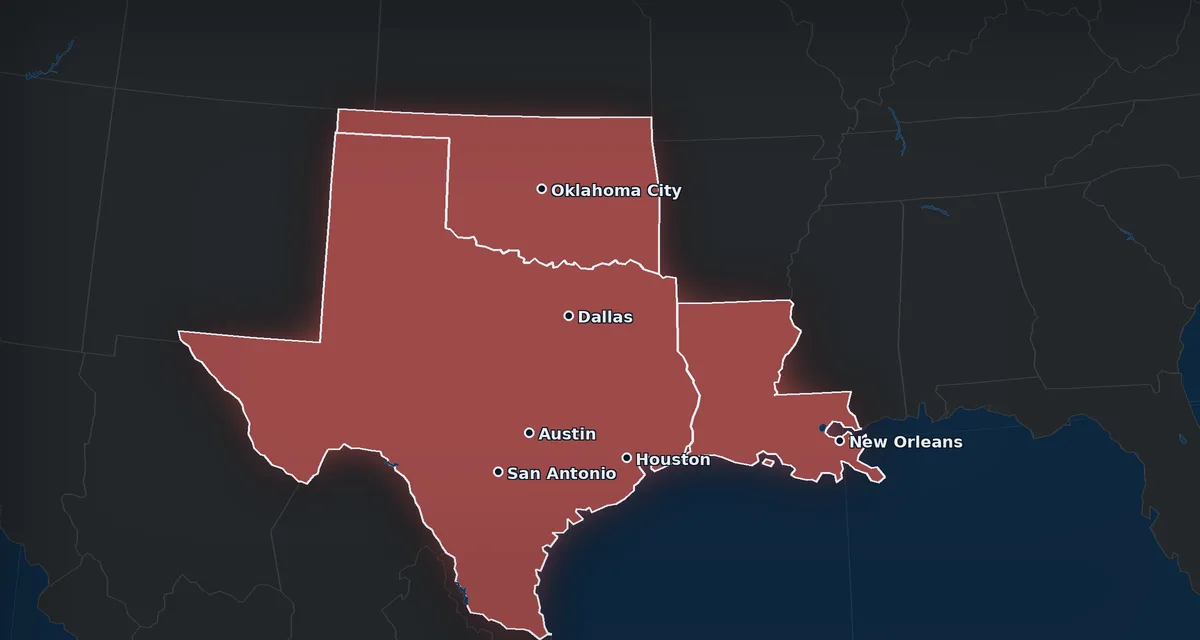
Texas, Oklahoma, and Louisiana at the top of the oil boom. You start with wells in the Permian.
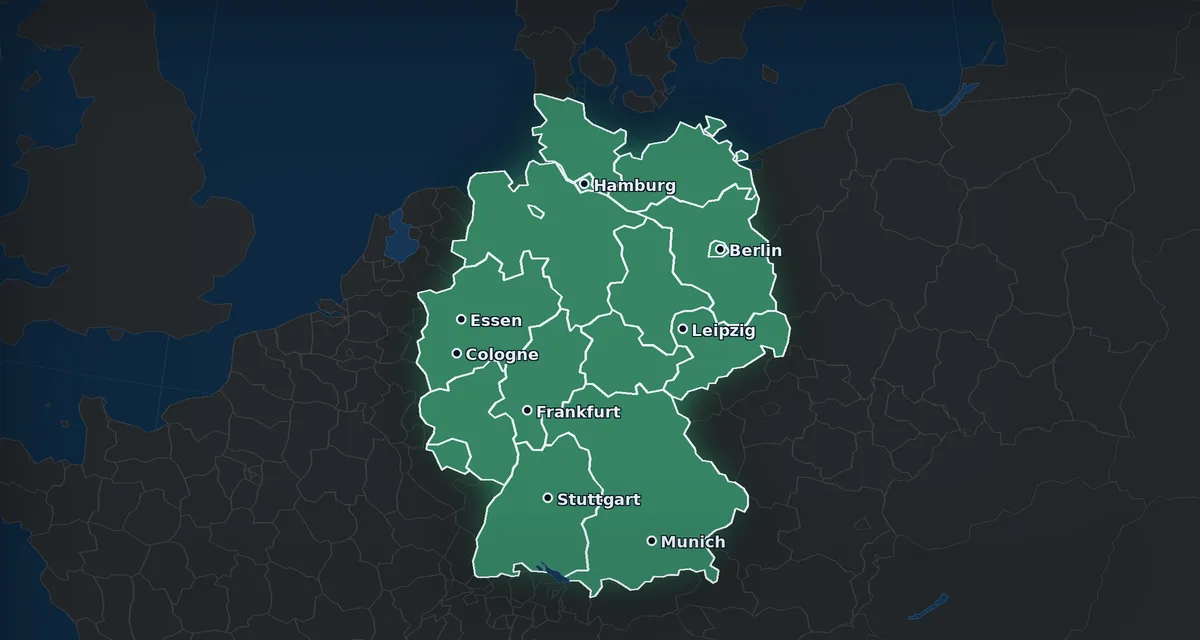
Germany, the Low Countries, and eastern France with five currencies and a peg that can break.
California from San Jose to San Diego through the chip slide, the 2000 spike, and the bust.
Yes. Version 1.7.0 is out. Windows, Linux, and Android builds are on the download page. The iPhone, iPad, and Mac versions are waiting on App Store approval.
Nothing while it is in development.
No. Corporate Warfare is an offline single-player game. Rival firms are run by the simulation, not by other players.
Not always. Big releases can change the economy enough that older saves do not load. The changelog says when that happens.
The GitHub repository has the changelog, releases, and issue tracker.